O panorama da pesquisa mudou para sempre
Se sente que o seu tráfego de pesquisa, arduamente conquistado, está a evaporar-se, não está a imaginar coisas. Está em curso uma mudança sísmica na forma como as pessoas encontram informação online.
Durante décadas, a Otimização para Motores de Busca (SEO) significou perseguir os 10 principais links azuis no Google, otimizando palavras-chave e backlinks para obter cliques a partir de uma lista de resultados de pesquisa. Mas em 2026, os utilizadores estão cada vez menos a clicar.
Eles estão a obter respostas únicas e sintetizadas de chatbots de IA e dos próprios motores de pesquisa, sem nunca visitar um website. Bem-vindo à era da Otimização por Motor Generativo (GEO)— uma nova abordagem focada não em posicionar-se nos resultados de pesquisa, mas em ser a fonte de confiança dentro Respostas geradas por IA.
🎯Insight Chave
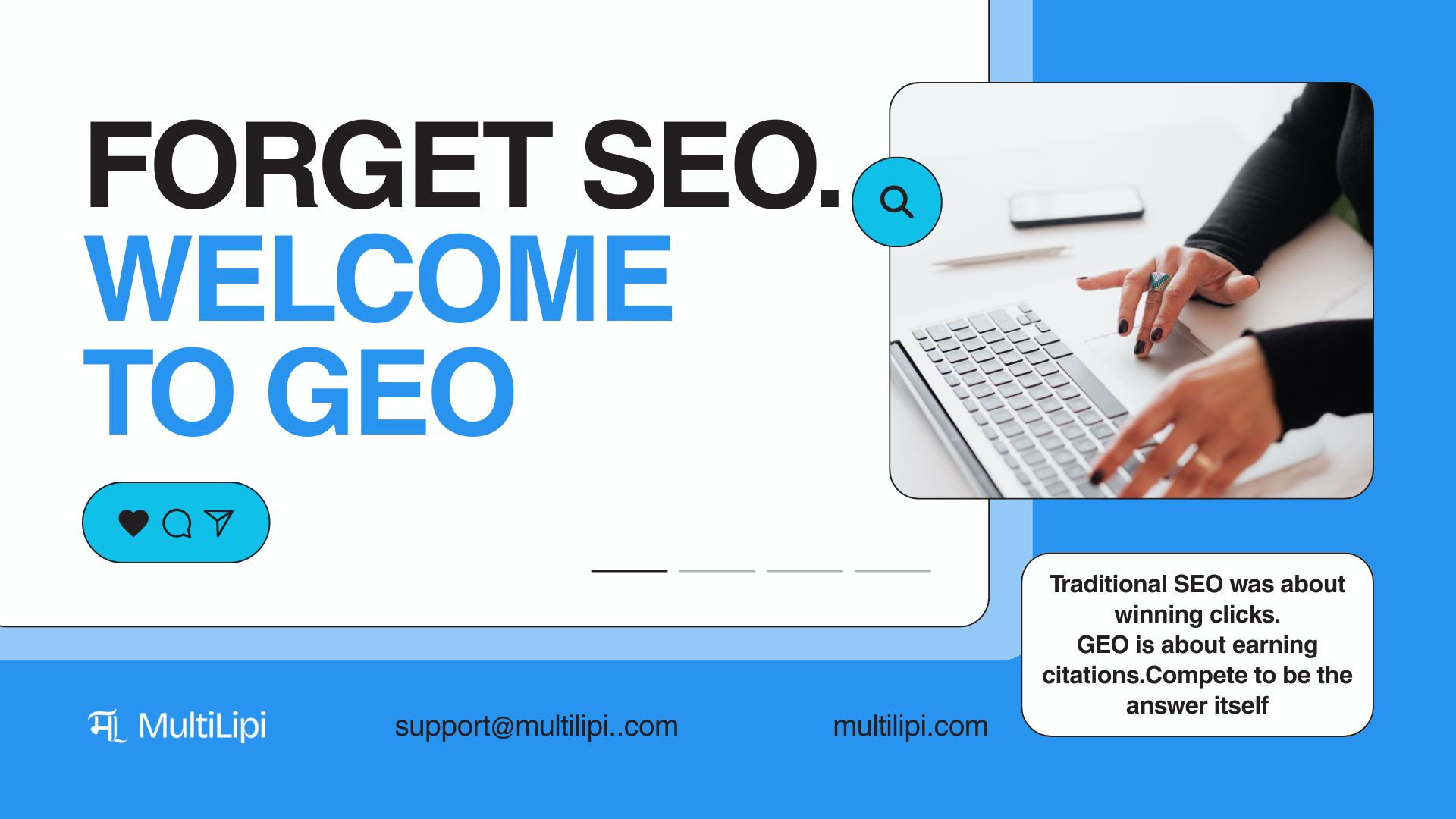
O SEO tradicional era sobre ganhar cliques dos resultados de pesquisa; GEO é sobre ganhar citações nas respostas geradas por IA. Por outras palavras, não está apenas a competir por uma posição no ranking—está a competir para ser a própria resposta.
A realidade sem cliques
Os números contam uma história evidente. Até meados de 2025, aproximadamente 65% das pesquisas no Google terminaram sem um clique — o que significa que os utilizadores encontraram o que precisavam diretamente na página de resultados de pesquisa, frequentemente através de resumos gerados por IA, snippets em destaque ou Painéis de Conhecimento. Em dispositivos móveis, onde o espaço de ecrã é limitado e as respostas de IA são ainda mais proeminentes, esta taxa de zero cliques sobe para 77%.
Ainda mais alarmante para os profissionais de SEO tradicional: a investigação mostra que, quando a Visão Geral de IA da Google aparece no topo dos resultados de pesquisa, a taxa de cliques para os resultados orgânicos abaixo cai nuns impressionantes 61%. Isto significa que, mesmo que tenha alcançado essa cobiçada 1.ª posição, a maioria dos utilizadores poderá nunca ver o seu link, pois já obtiveram a respetiva resposta através da IA.
Esta não é uma anomalia temporária nem uma tendência passageira. Trata-se de uma transformação fundamental na forma como a informação é descoberta e consumida online. A transição dos motores de busca tradicionais para motores de resposta alimentados por IA representa a alteração mais significativa no marketing digital desde o advento da pesquisa móvel.
SEO vs. GEO: Dos Links Azuis aos Motores de Resposta
Para compreender porque é que a GEO é o novo mandato, vamos primeiro clarificar a distinção entre o antigo jogo e a nova realidade.
O que é SEO (Search Engine Optimization)?
O SEO é a prática de otimizar o seu sítio Web para obter uma melhor classificação nas páginas de resultados dos motores de busca (SERPs) para que os utilizadores cliquem para aceder ao seu sítio. O sucesso no SEO tem sido medido há muito pelo tráfego orgânico e pelas classificações. A disciplina envolve a seleção de palavras-chave específicas, a obtenção de backlinks para construir autoridade, a otimização de elementos técnicos como a velocidade do sítio e a responsividade móvel, e a criação de conteúdo que satisfaça a intenção do utilizador.
O objetivo final sempre foi atrair um clique da SERP para o seu site — tratava-se fundamentalmente de competir pela visibilidade entre outros links. Os praticantes de SEO tradicionais focavam-se em compreender os algoritmos de classificação do Google, construir autoridade de domínio através da aquisição de links e otimizar elementos on-page para sinalizar relevância e qualidade.
No entanto, este modelo está a mostrar sinais de desgaste. Hoje, os «featured snippets» da Google, os Painéis de Conhecimento e os novos resumos potenciados por IA fornecem informação diretamente na página de resultados. A própria SERP tornou-se o destino, e não apenas um ponto de passagem para outros sites. Para uma análise mais aprofundada sobre as estratégias de otimização tradicionais, consulte o nosso guia abrangente de SEO para Hreflang.
O que é GEO (Otimização para Motores de Geração)?
A Otimização para Motores de Geração (GEO) é a prática de otimizar o seu conteúdo especificamente para motores de resposta impulsionados por IA, em vez de apenas para motores de busca tradicionais. Em termos simples, a GEO consiste em tornar o seu conteúdo citável e referenciável por sistemas de IA como o ChatGPT, a Search Generative Experience (SGE) do Google, o Perplexity AI e assistentes de voz como a Amazon Alexa.
Em vez de lutar para ser o resultado #1 numa página de links, está a lutar para ser a fonte que uma IA extrai para a sua resposta única sintetizada. O sucesso não é medido apenas por cliques e volume de tráfego, mas por citações, menções e visibilidade dentro das respostas de IA. O utilizador poderá nunca clicar no seu link — mas a perspetiva, os dados ou a experiência da sua marca influenciaram na mesma a sua decisão, construíram a sua autoridade e potencialmente conduziram a futuras conversões através da recordação da marca.
O GEO requer uma mudança fundamental na forma como pensamos sobre a criação de conteúdos. Em vez de otimizar para palavras-chave e métricas de links, otimizamos para entidades, dados estruturados, precisão factual, fontes autorizadas e declarações claras e citáveis. Trata-se de nos tornarmos uma fonte em que os sistemas de IA confiam e que referenciam repetidamente ao longo de milhares de consultas.
A Evolução: SEO → GEO
A Mudança Fundamental
Abordagem de SEO Tradicional
Abordagem GEO Moderna
Porquê a GEO É o Novo Padrão para 2026
A mudança para GEO é impulsionada por evoluções dramáticas tanto no comportamento do utilizador como na tecnologia de pesquisa. Compreender estas forças é crítico — porque aderir apenas ao SEO tradicional significa ver a sua visibilidade desvanecer-se à medida que o panorama digital se transforma à sua volta.
1. A Explosão das Pesquisas sem Clique
Como mencionado anteriormente, mais de metade de todas as pesquisas terminam agora sem um clique. Isto não se deve à insatisfação dos utilizadores — muito pelo contrário. Os motores de busca e os sistemas de IA tornaram-se tão eficientes a extrair e apresentar informação que os utilizadores conseguem obter o que precisam sem nunca abandonar a página de resultados. Os snippets em destaque do Google, os Knowledge Graphs, os AI Overviews e as respostas diretas satisfazem as consultas instantaneamente.
Para as empresas, isto cria um paradoxo: pode fornecer a melhor resposta e continuar a receber zero tráfego. O seu conteúdo pode ser destacado de forma proeminente numa resposta ou fragmento de IA, dando aos utilizadores exatamente o que precisam, mas nunca direcionando-os para o seu site. É por isto que otimizar para citações e menções de marca — e não apenas para cliques — se tornou essencial.
2. Canibalização de Tráfego Orgânico por IA
Estudos documentaram um impacto dramático nas taxas de cliques orgânicas quando o conteúdo gerado por IA aparece no topo dos resultados de pesquisa. Uma análise abrangente descobriu que a introdução da funcionalidade AI Overview do Google levou a uma queda de 61% nos cliques para resultados orgânicos tradicionais. Pense nisto: alcançar a posição orgânica #1 costumava garantir tráfego significativo, mas agora pode significar muito pouco se uma resposta de IA dominar a área de visualização.
Isto não se cinge ao Google. A integração do Bing com o ChatGPT, a ascensão do Perplexity AI como alternativa de pesquisa e a crescente sofisticação dos assistentes de voz apontam todos para a mesma tendência: a pesquisa mediada por IA está a tornar-se a norma e as listagens de resultados tradicionais estão a passar para segundo plano.
3. A IA como Principal Ferramenta de Investigação
Talvez a mudança mais significativa seja comportamental. De acordo com pesquisas recentes, 89% dos compradores B2B utilizam atualmente ferramentas de IA generativa como ChatGPT, Claude ou Gemini para investigação e comparação durante o seu processo de compra. Estão a fazer perguntas detalhadas, a comparar soluções e a tomar decisões preliminares — tudo isto antes de visitarem o sítio Web de um fornecedor.
Se o seu conteúdo não estiver estruturado de uma forma que os sistemas de IA consigam compreender, extrair e citar, é simplesmente invisível para estes compradores. Estão a formar opiniões e a selecionar fornecedores com base no que a IA lhes diz e, se não fizer parte dessa conversa, perdeu a oportunidade antes mesmo de ela começar.
4. Alteração das Expectativas dos Consumidores
A forma como os utilizadores pesquisam mudou radicalmente. As consultas de pesquisa tradicionais eram curtas—tipicamente 2 a 4 palavras como "melhor software de CRM" ou "restaurante italiano em Lisboa". Em contrapartida, as consultas de pesquisa por IA têm uma média de 23 palavras, pois as pessoas aprenderam que podem fazer perguntas detalhadas e conversacionais e obter respostas abrangentes.
Os utilizadores esperam agora respostas diretas e sintetizadas, em vez de uma lista de links para explorar. Querem que o motor de busca ou a IA faça o trabalho de agregar informação de várias fontes e apresentar uma resposta coerente. Esta mudança de expectativas altera fundamentalmente o significado de "otimização para motores de busca".
5. Declínio Projetado do Tráfego Orgânico Tradicional
A Gartner, uma das principais empresas de investigação e consultoria do mundo, fez uma previsão ousada: até 2028, o tráfego de pesquisa orgânica para sites de marcas cairá 50% ou mais devido aos motores de busca e de resposta alimentados por IA. Isto não é alarmismo — é uma previsão baseada em dados, fundamentada nas tendências atuais de adoção e na trajetória tecnológica.
⚠️Aviso Crítico da Indústria
A Gartner prevê que, até 2028, o tráfego de pesquisa orgânica para websites de marcas cairá 50% ou mais devido à pesquisa potenciada por IA. Esta não é uma ameaça distante — os primeiros indicadores sugerem que já está a acontecer. As empresas que não conseguem adaptar-se às estratégias de GEO correm o risco de perder metade do seu tráfego orgânico no espaço de apenas 2 a 3 anos.
A boa notícia? Esta transformação também cria oportunidades. As empresas que dominam a GEO precocemente conseguem captar a atenção do público e estabelecer autoridade nos sistemas de IA antes que os concorrentes o façam. Ser citado pela IA torna-se uma barreira competitiva — uma vez que um sistema de IA identifica a sua marca como autoritária num tema, tende a referenciá-la repetidamente.
O próprio mercado de GEO reflete esta oportunidade. Avaliado em 886 milhões de dólares em 2024, o mercado de ferramentas, serviços e conhecimentos de GEO deverá atingir 7,3 mil milhões de dólares até 2031, crescendo a uma taxa de crescimento anual composta de 32%. O GEO está preparado para se tornar tão fundamental para o marketing digital como o SEO tem sido nas últimas duas décadas.
A Revolução GEO em Números
Mais de 120 Idiomas, Crescimento de 32% CAGR
A GEO está a tornar-se tão fundamental para o marketing digital quanto o SEO, com um crescimento de mercado explosivo em todas as línguas globais.
O Guia Prático de GEO: Otimizar para Motores de Resposta
Agora que compreendemos o motivo pelo qual o GEO importa, vamos discutir como implementá-lo. A prática de GEO requer o foco em vários pilares fundamentais que tornam o seu conteúdo "compatível com IA" e digno de citação.
Conteúdo com Resposta Imediata
Forneça respostas claras e diretas logo no início. Utilize etiquetas de título (heading tags) para as perguntas e responda imediatamente a seguir.
Dados Estruturados e Esquema
A marcação de esquemas (Schema markup) transforma o conteúdo em dados acessíveis por máquinas que os sistemas de IA podem facilmente extrair e citar.
Foco em Entidades
Os modelos de IA compreendem entidades em vez de palavras-chave. Utilize terminologia padrão e definições claras de entidades.
Sinais de Autoridade
Exibir sinais de E-E-A-T: credenciais do autor, datas de publicação, citações e indicadores de especialização.
Pilar 1: Estrutura de Conteúdo com Resposta Primeiro
Não esconda o essencial. Para cada pergunta importante que o seu público possa colocar, forneça uma resposta clara e direta logo de início. Isto pode significar começar as suas publicações no blog com um resumo de um parágrafo que aborde diretamente a pergunta do título, ou criar uma secção de FAQ dedicada que forneça respostas imediatas antes de mergulhar em explicações detalhadas.
Utilize as etiquetas de cabeçalho estrategicamente. Um H2 que diga "O que é a Marcação de Esquemas?" deve ser imediatamente seguido por uma definição clara, e não por vários parágrafos de preâmbulo. Os sistemas de IA são excelentes a identificar estes padrões de pergunta-resposta e citarão preferencialmente o conteúdo que segue esta estrutura. Consulte o nosso Guia de SEO Multilingue para mais boas práticas de estruturação de conteúdos.
Pilar 2: Dados Estruturados e Marcação de Esquemas
O 'schema markup' é um código que ajuda os motores de busca e os sistemas de IA a compreenderem o contexto e o significado do seu conteúdo. Transforma o seu conteúdo em dados estruturados compatíveis com máquinas. Os sistemas de IA adoram isto porque elimina a ambiguidade — por exemplo, o esquema FAQ diz explicitamente a uma IA: "Aqui está uma pergunta e aqui está a sua resposta", tornando extremamente fácil extrair e citar.
A investigação demonstra consistentemente que as páginas com esquemas de FAQ, Article ou HowTo apresentam taxas de citação significativamente mais elevadas nas respostas de IA. Para sites multilingues, isto torna-se ainda mais crítico: deve garantir que o seu esquema está devidamente localizado para cada versão linguística. O nosso Guia de implementação de Hreflang aborda detalhadamente a localização técnica de esquemas.
Pilar 3: Foco na Entidade e Clareza Semântica
Os modelos de IA compreendem entidades — pessoas, locais, conceitos, organizações e produtos — em vez de apenas palavras-chave. Uma entidade é algo único e bem definido que existe no mundo. A empresa "Apple" é uma entidade; a fruta "maçã" é uma entidade diferente. Os sistemas de IA utilizam o contexto para desambiguar, mas pode ajudar ao ser totalmente claro sobre que entidades o seu conteúdo aborda.
Torne as suas referências a entidades explícitas. Defina termos novos ou de nicho quando os introduzir pela primeira vez — exatamente como fizemos com "GEO" neste artigo. Utilize terminologia consistente em todo o seu conteúdo. Crie links internos para outros conteúdos que estabeleçam a sua especialidade em entidades relacionadas. Isto constrói autoridade temática, sinalizando aos sistemas de IA que é uma fonte abrangente e fiável num domínio de conhecimento inteiro, não apenas em palavras-chave individuais.
Pilar 4: Sinais de Autoridade e Confiança (E-E-A-T)
Os motores de resposta de IA são extremamente seletivos quanto às fontes em que confiam e que citam. Referenciam preferencialmente fontes autorizadas e bem estabelecidas em detrimento de outras desconhecidas ou questionáveis. Isto torna a E-E-A-T (Experiência, Perícia, Autoridade e Confiabilidade) mais importante do que nunca.
Para construir confiança, certifique-se de que os seus factos são apoiados por fontes credíveis. Crie links para entidades autorizadas — citar Gartner, Google ou investigação académica acrescenta credibilidade. Exiba as credenciais do autor de forma proeminente, incluindo a experiência e o conhecimento relevantes. Utilize datas de publicação e atualização para mostrar a frescura do conteúdo. Inclua citações e referências. Todos estes sinais ajudam os sistemas de IA a avaliar se o seu conteúdo é suficientemente confiável para ser citado.
Para conteúdos B2B e empresariais, considere adicionar biografias de autores, credenciais da empresa, certificações, resultados de estudos de caso e fontes de dados. Quanto mais conseguir demonstrar competência e autoridade, maior será a probabilidade de os sistemas de IA tratarem o seu conteúdo como uma fonte primária digna de citação repetida.
A Transição de SEO para GEO: Uma Análise Estratégica
A transição da pesquisa tradicional para os motores gerativos marca uma mudança fundamental na forma como o conteúdo digital é avaliado e descoberto. Compreender como as duas estratégias diferem em dimensões-chave ajuda a clarificar o que deve mudar na sua abordagem.
Objetivo Principal: Cliques vs. Citações
O objetivo principal do SEO tradicional era simples: posicionar-se suficientemente bem para obter cliques da SERP para o seu site. O objetivo da GEO é diferente: obter citações e menções em respostas geradas por IA, mesmo que os utilizadores nunca visitem o seu site. Isto requer uma mudança de mentalidade — está a otimizar para influência e autoridade de marca, e não apenas para métricas de tráfego.
Métricas de Sucesso: Tráfego vs. Autoridade de Marca
O sucesso de SEO era medido por posições, tráfego orgânico e taxas de conversão desse tráfego. O sucesso de GEO requer novas métricas: frequência de citação (com que frequência os sistemas de IA fazem referência ao seu conteúdo), taxa de menção de marca (com que frequência a sua marca aparece nas respostas da IA), taxa de inclusão de resposta (percentagem de consultas relevantes onde é citado) e pontuação de autoridade (como os sistemas de IA avaliam a sua experiência temática). Estas métricas são mais difíceis de monitorizar, mas cada vez mais cruciais de compreender.
Táticas Principais: Palavras-chave vs. Entidades
Táticas de SEO centradas na pesquisa de palavras-chave e na aquisição de backlinks. As táticas de GEO focam-se na otimização de entidades, implementação de esquemas (schema), precisão factual, credibilidade de fontes e clareza semântica. Embora as palavras-chave ainda importem para a descoberta, assumem um papel secundário face ao reconhecimento como fonte autoritária sobre entidades e tópicos específicos.
Jornada do Utilizador: Multi-etapa vs. Instantânea
A jornada tradicional do utilizador em SEO tinha múltiplos passos: o utilizador pesquisa, analisa a SERP, clica num resultado e consome conteúdo no seu site. A jornada do utilizador em GEO é frequentemente de passo único: o utilizador faz uma pergunta, a IA fornece uma resposta sintetizada obtida a partir de várias fontes. O seu conteúdo influencia a compreensão e a tomada de decisão do utilizador, mas este poderá nunca interagir diretamente com o seu site.
Cenário Competitivo: 10 Páginas vs. Toda a Base de Conhecimento
No SEO, competias com cerca de outros 10 sites pela visibilidade na página 1 dos resultados de pesquisa. No GEO, competes com toda a base de conhecimento da IA — potencialmente milhões de fontes. Isto torna a construção de autoridade temática e de sinais de confiança ainda mais crítica. Precisas de ser não apenas bom, mas inequivocamente autoritário no teu tema.
O Desafio da GEO Multilingue
Se otimizar para um idioma é complexo, imagine fazê-lo para 50, 100 ou 120 idiomas. Para marcas globais e empresas internacionais, a dimensão multilíngue do GEO é simultaneamente um desafio massivo e uma oportunidade enorme.
A Oportunidade Global
Embora a maioria das empresas concentre os seus esforços de GEO em conteúdos em inglês, isto descura uma oportunidade massiva. Os mercados multilingues representam aproximadamente 75% dos utilizadores globais da Internet. Os sistemas de IA como o ChatGPT, o Gemini da Google, o Claude da Anthropic e outros são cada vez mais sofisticados em dezenas de línguas — o que significa que as audiências internacionais também estão a obter respostas geradas por IA para as suas consultas.
Se não estiver otimizado para a GEO em francês, espanhol, alemão, japonês, árabe, hindi e outras línguas principais, estará invisível para milhares de milhões de potenciais clientes que utilizam a pesquisa por IA na sua língua materna. Eles estão a tomar decisões de compra com base em recomendações de IA e, se a sua marca não fizer parte dessa conversa na língua deles, perdeu a oportunidade.
Desafios Únicos da GEO Multilíngue
O GEO multilingue não é simplesmente uma questão de traduzir o seu conteúdo em inglês. Cada mercado linguístico tem considerações únicas. A marcação de esquema precisa de ser localizada, e não apenas traduzida — os conceitos culturais e as entidades podem diferir. As etiquetas hreflang devem ser implementadas corretamente para sinalizar a segmentação de idioma e regional aos motores de busca e sistemas de IA.
A consistência de entidades em diferentes idiomas é crítica, mas desafiadora. O nome da sua marca, os nomes dos produtos e os conceitos-chave precisam ser reconhecidos como as mesmas entidades em todas as versões linguísticas. A estrutura do conteúdo pode necessitar de adaptação às preferências culturais — algumas culturas preferem respostas diretas e concisas, enquanto outras esperam mais contexto e construção de relacionamento no conteúdo.
Talvez o mais desafiante: é necessário monitorizar e medir as citações de IA em diferentes modelos de linguagem e plataformas de IA regionais. Um sistema de IA treinado principalmente com dados em inglês poderá não compreender ou citar corretamente o seu conteúdo em alemão, e vice-versa. Isto exige estratégias de GEO específicas para cada idioma, e não uma abordagem única para todos.
Lista de Verificação de Implementação
A Solução MultiLipi
MultiLipi foi criado especificamente para resolver o desafio do GEO multilingue à escala. A nossa plataforma automatiza a otimização de GEO em mais de 120 idiomas, garantindo que o seu conteúdo é devidamente estruturado, localizado e otimizado para citações por IA em cada mercado-alvo. Desde a localização de esquemas até ao mapeamento de entidades e à adaptação de conteúdos culturais, o MultiLipi gere a complexidade do GEO multilingue para que se possa concentrar na criação de excelentes conteúdos. Comece com as nossas ferramentas gratuitas: Gerador de Schema, Gerador de LLMs.txt, e Analisador de SEO. Saiba mais sobre o nosso preços e funcionalidades.
O Futuro Já Aqui Está
A era do SEO tradicional não terminou por completo, mas a sua dominância está a desvanecer-se rapidamente. À medida que a pesquisa impulsionada por IA se torna o modo padrão pelo qual as pessoas encontram informação, as empresas que prosperarem serão aquelas que dominarem a Otimização para Motores Generativos.
O GEO não se cinge apenas a adaptar-se a nova tecnologia — trata-se de repensar fundamentalmente a forma como cria, estrutura e apresenta conteúdos. Consiste em tornar-se numa fonte de confiança que os sistemas de IA querem citar, e não apenas num website a competir por cliques.
A transição está a acontecer agora. As empresas que se adaptarem precocemente vão afirmar-se como fontes de autoridade nos sistemas de IA, construindo uma vantagem competitiva que se acumula com o tempo. Aquelas que aguardarem correm o risco de se tornarem invisíveis à medida que o mundo transita para a pesquisa mediada por IA.
A questão não é saber se a IA vai mudar a pesquisa — já o fez. A questão é se a sua marca fará parte da resposta.
Se opera em vários idiomas, a complexidade multiplica-se — mas a oportunidade também. Ser citado por sistemas de IA em 50 ou 100 idiomas significa alcançar milhares de milhões de utilizadores que talvez nunca tivesse alcançado apenas através do SEO tradicional.
Pronto para dominar a GEO? Comece por implementar os quatro pilares: conteúdo com resposta em primeiro lugar, dados estruturados, foco em entidades e sinais de autoridade. Para implementações multilingues, considere plataformas como o MultiLipi que gerem a complexidade da GEO à escala em dezenas ou centenas de línguas.